
Radiation Protection

How to Choose the Right X-Ray Garment
3 view(s)

How to Choose the Right X-Ray Garment

Medical imaging procedures such as fluoroscopy, C-arm imaging, and interventional radiology expose clinicians to scatter radiation on a routine basis. Over time, repeated occupational exposure can increase the risk of long-term health concerns, which is why following radiation safety practices—including the use of appropriate protective apparel—is essential.

Organizations such as the CDC emphasize the importance of following ALARA (As Low As Reasonably Achievable) principles, which include minimizing exposure time, maximizing distance from the radiation source, and wearing properly designed personal protective equipment (PPE).

Selecting the right X-ray apparel helps ensure clinicians remain protected, comfortable, and able to perform procedures efficiently.


Essential Types of X-Ray Protective Apparel

Healthcare professionals working near imaging equipment typically rely on several types of radiation protection garments.

Lead Aprons

Lead aprons provide core protection by shielding critical organs such as the heart, lungs, and reproductive organs from scatter radiation. Research published in the Journal of Clinical Orthopaedic Trauma indicates that properly designed 0.5 mm lead-equivalent aprons can attenuate up to 99% of scatter radiation when used correctly.

Aprons are available in multiple styles, including:

  • Front protection

  • Wraparound designs

  • Vest-and-skirt configurations

  • Specialty maternity designs

Selecting the correct configuration helps balance protection, mobility, and ergonomic comfort.


Thyroid Shields

The thyroid gland is particularly sensitive to radiation exposure, making thyroid collars an essential component of protective apparel. Studies published in the European Journal of Radiology and Korean Journal of Pain demonstrate that properly fitted thyroid shields can significantly reduce exposure to this sensitive organ.

A snug fit is important to ensure consistent coverage during procedures.


Radiation Protection Eyewear

The eyes are also vulnerable to radiation exposure, particularly during high-dose or prolonged procedures. Radiation protection glasses are designed to reduce lens exposure and help lower the risk of radiation-related cataracts. Research published in Physica Medica shows that protective eyewear can meaningfully reduce radiation exposure to the eyes.


Key Factors to Consider When Choosing X-Ray Apparel

Selecting the right radiation protection garments involves evaluating several important factors.

Fit and Comfort

Proper fit is essential for both protection and wearability. Garments should:

  • Provide full anatomical coverage

  • Distribute weight evenly

  • Allow comfortable movement during procedures

Well-fitted garments also reduce fatigue and improve long-term compliance with safety protocols.


Lead Equivalency and Thickness

Radiation protection garments are rated by lead equivalency, which reflects their shielding capability. Typical guidelines include:

  • Aprons: commonly 0.25–0.5 mm lead equivalency depending on procedure type

  • Thyroid shields: typically 0.5 mm lead equivalency

  • Eyewear: commonly 0.5–0.75 mm lead equivalency

Higher exposure procedures may require greater shielding, while lighter garments may be suitable for lower-dose environments. Facilities should consult their Radiation Safety Officer (RSO) when determining appropriate protection levels.


Material Options

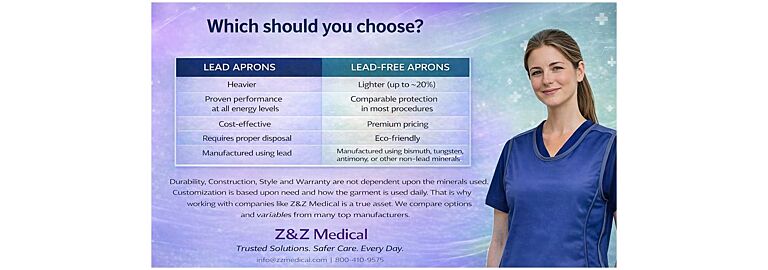
Traditional lead remains a highly effective shielding material due to its density, but newer composite and lead-free materials are also available. These may incorporate metals such as tungsten, bismuth, barium, tin, or antimony to provide protection while reducing garment weight.

Some studies have shown that lighter composite garments can reduce physical strain for clinicians who wear protective apparel for extended periods, though material selection should always align with procedural exposure requirements.


Maintaining X-Ray Apparel for Long-Term Protection

Protective garments must be properly maintained to remain effective. Recommended best practices include:

  • Annual radiographic inspections to detect cracks or tears

  • Routine cleaning and disinfection

  • Proper hanging storage to prevent folding damage

  • Prompt removal of compromised garments from service

Research published in the Journal of Health Physics shows that small defects can expand over time, emphasizing the importance of routine inspection and preventative maintenance.


Making the Right Choice for Your Facility

Choosing the right X-ray apparel involves balancing protection level, comfort, procedural requirements, and staff workflow needs. Facilities that evaluate garment fit, shielding performance, and maintenance practices are better positioned to maintain strong radiation safety programs and long-term clinician protection.

At Z&Z Medical, we help imaging departments, interventional suites, cath labs, and other imaging facilities evaluate radiation protection apparel options to ensure teams receive protection that is both effective and comfortable for everyday clinical use. Because when protective apparel fits properly and performs reliably, safety becomes part of the workflow—not an added burden. Email us at info@zzmedical.com to learn more or to ask us a question anytime. 

Are Lead Aprons Dangerous? Understanding the Facts About Radiation Protection Garments
9 view(s)

Are Lead Aprons Dangerous? Understanding the Facts About Radiation Protection Garments

Lead aprons have been a foundational element of radiation protection in medical imaging and interventional environments for decades. Designed to reduce exposure to scatter radiation, these garments help protect healthcare professionals and patients during procedures involving fluoroscopy, C-arms, cath labs, and other imaging departments.

Despite their long-standing role in clinical safety, questions occasionally arise:

  • Are lead aprons safe?

  • Do they create any health risks?

  • Are they still necessary with modern imaging technology?

Understanding the science, proper use, and best practices surrounding radiation protection garments helps healthcare teams make informed safety decisions.


Are Lead Aprons Safe?

Yes. Lead aprons are safe when properly used, maintained, and inspected. Radiation safety authorities worldwide continue to recommend protective garments in environments where repeated imaging or higher radiation output procedures occur.

Lead’s high density and atomic structure allow it to effectively attenuate scatter radiation, significantly reducing occupational exposure for clinicians working near imaging equipment. When garments meet regulatory testing standards and are worn correctly, they provide reliable and proven protection.


Do Lead Aprons Do More Harm Than Good?

When managed appropriately, the protective benefits of lead aprons far outweigh potential drawbacks. However, two operational considerations should be addressed to ensure optimal safety:

Ergonomic Considerations

Traditional lead garments can be heavy, particularly during long interventional procedures. Extended wear may contribute to fatigue or musculoskeletal strain if garments are not properly fitted or if weight distribution is not optimized. Facilities can reduce strain by:

  • Selecting properly fitted garments

  • Using vest-and-skirt configurations when appropriate

  • Choosing ergonomic or lightweight material options

Cleaning and Infection Control

Like any frequently handled clinical equipment, protective garments must be routinely cleaned and disinfected to reduce contamination risk. Establishing consistent wipe-down protocols and periodic deep cleaning ensures garments remain hygienic and safe for continued use.


How Lead Aprons Protect Against Radiation

Lead aprons function by attenuating scatter radiation—secondary radiation that deflects from patients or equipment during imaging procedures. While the primary imaging beam is directed at the area of clinical interest, scatter radiation can travel in multiple directions, potentially exposing nearby staff.

A properly maintained protective garment with appropriate lead equivalency can block the vast majority of this scatter radiation, helping to protect critical organs and reduce cumulative occupational exposure over time.


The Importance of Inspection and Proper Storage

The effectiveness of any radiation protection garment depends on its condition. Facilities should implement routine inspection programs to identify cracks, tears, or material fatigue that may reduce shielding performance. Best practices include:

  • Annual radiographic integrity inspections

  • Visual checks prior to use

  • Proper hanging storage to prevent folding damage

  • Prompt removal of damaged garments from service

Maintaining inspection records also supports regulatory compliance and ensures consistent staff protection.


Are There Alternatives to Traditional Lead Aprons?

Advancements in radiation protection materials have introduced composite and lead-free garments that may offer reduced weight while maintaining protective performance in many clinical applications. Facilities should evaluate shielding requirements, procedure types, and staff preferences when determining which material options best meet their needs.


Making Informed Radiation Protection Decisions

Rather than asking whether lead aprons are dangerous, the more accurate question is whether garments are properly selected, fitted, inspected, and maintained. When these best practices are followed, protective apparel remains one of the most effective safeguards against occupational radiation exposure.

At Z&Z Medical, we work with healthcare facilities to help evaluate radiation protection options, garment configurations, and inspection strategies that support long-term clinical safety and staff comfort. Because when protection programs are properly managed, radiation safety becomes both reliable and sustainable. Reach out to us at info@zzmedical.com with any questions that you may have or call our customer service team at 800-410-9575.

Who Makes the Best Lead Aprons? A Practical Guide for Healthcare Facilities
3 view(s)

Who Makes the Best Lead Aprons? A Practical Guide for Healthcare Facilities

Medical facilities committed to protecting staff from occupational radiation exposure must carefully evaluate personal protective equipment (PPE), including radiation protection garments worn during diagnostic imaging, fluoroscopy, and in interventional  and cath lab procedures. Because radiation exposure accumulates over time, selecting the right protective garment is an important safety decision. One of the most common questions facilities ask us is:

“Who makes the best lead aprons?”

The answer depends on several factors—including clinical application, comfort requirements, customization needs, and budget considerations. Each manufacturer offers distinct advantages, and the best choice is often the one that aligns most closely with your department’s workflow and user preferences.


Leading Radiation Protection Apron Manufacturers

Several well-established manufacturers produce high-quality radiation protection garments used across healthcare facilities nationwide. Below is a general overview of commonly selected brands.

Burlington Medical

is widely recognized for its custom-fit apron programs, offering a broad range of sizing options designed to improve fit, comfort, and coverage. Custom sizing can help reduce garment shifting during procedures and support long-term ergonomic comfort for clinicians who wear protection for extended periods.

INFAB

focuses on ergonomic garment design and material transparency, providing detailed information about shielding compositions and apron construction. Many of their garment styles emphasize comfort features such as flexible shoulder construction and durability-focused pocket and seam design.

Guardian

radiation protection garments are designed to provide reliable protection and simplified ordering options, with a user-friendly sizing system. Their garments are engineered for routine clinical use across imaging departments and offer a FREE THyroid Collar with every garment purchase!

Protech

offers a selection of traditional apron styles, including vest-and-skirt combinations and front-protection garments. Their range of configurations allows facilities to match protection styles to procedural needs and staff preferences.

Shielding International

is known for producing radiation protection accessories and specialty shielding products, including dental aprons, thyroid collars, half aprons, and protective shields used in a variety of clinical settings.


How to Compare Lead Apron Quality Across Brands

When evaluating radiation protection garments, healthcare facilities should focus on performance, durability, and user comfort rather than selecting a manufacturer based on name recognition alone. Key factors to review include:

Testing and attenuation data
Manufacturers should provide documented shielding performance across different energy levels to ensure effective protection during a range of imaging procedures.

Construction quality
High-quality stitching, reinforced seams, and proper material distribution help maintain protection integrity over time.

Outer material durability
Abrasion-resistant outer coverings improve garment longevity and reduce premature wear.

Fit and ergonomic design
Proper fit is essential for protecting critical organs while maintaining clinician comfort during long procedures.


Choosing the Right Apron for Your Facility

Rather than searching for a single “best” manufacturer, many facilities find the best approach is to evaluate multiple brands based on:

  • Clinical use and procedure type

  • User comfort preferences

  • Weight and material selection

  • Customization requirements

  • Budget and replacement cycle planning

At Z&Z Medical, we work with leading radiation protection manufacturers and help facilities compare options side-by-side so departments can select garments that best match their staff’s needs and procedural environments. Because when radiation protection is comfortable, properly fitted, and appropriate for the procedure, compliance improves—and safety follows.  Reach out to us today at info@zzmedical.com to help you choose the right garments from top notch manufacturers.

Cardiovascular Professionals Appreciation Week: Thank You for Protecting Hearts Every Day
4 view(s)

Cardiovascular Professionals Appreciation Week: Thank You for Protecting Hearts Every Day

February 9–15 marks Cardiovascular Professionals Appreciation Week, a time to recognize the clinicians who dedicate their expertise, skill, and compassion to caring for patients with heart disease. From cardiologists and interventional physicians to cath lab teams, technologists, nurses, and imaging professionals—your work saves lives every single day.


The Work Behind the Scenes Matters

Cardiovascular care often happens in high-pressure environments where precision and focus are critical. Long procedures, advanced imaging, and rapid decision-making are part of the daily routine.

Many cardiovascular professionals spend hours each shift:

  • Standing at procedure tables

  • Wearing protective equipment

  • Working around fluoroscopy and other imaging systems

Your commitment ensures patients receive timely, accurate, and life-saving care.


Appreciation Includes Protection

At Z&Z Medical, we believe appreciation goes beyond words. Supporting cardiovascular professionals also means supporting:

  • Safer imaging environments

  • Radiation protection practices that reduce long-term risk

  • Tools designed to improve comfort, workflow, and career longevity

Because protecting those who care for hearts is part of protecting healthcare itself.


Thank You

This week—and every week—we thank you for:

  • Your expertise

  • Your dedication

  • Your unwavering commitment to patient care

Happy Cardiovascular Professionals Appreciation Week!!!

Go Red for Women: Protecting Women’s Hearts in Imaging & Interventional Care
0 view(s)

Go Red for Women: Protecting Women’s Hearts in Imaging & Interventional Care

Every February, Go Red for Women® shines a spotlight on a critical reality: Heart disease is the leading cause of death for women, yet it is still widely misunderstood, underdiagnosed, and undertreated. Go Red for Women is about education, advocacy, and action—empowering women to understand their risks, recognize symptoms, and receive the care they need. But it’s also an important moment to recognize the healthcare professionals—many of them women—who care for heart patients every day, often while facing occupational health risks of their own.


Heart Health Looks Different for Women. Heart disease doesn’t always present the same way in women as it does in men. Women are more likely to experience:

  • Atypical or subtle symptoms
  • Delayed diagnosis
  • Different risk profiles related to hormones, pregnancy, and menopause

This makes accurate imaging, timely intervention, and safe diagnostic environments especially important in women’s cardiovascular care. From echocardiography and CT to fluoroscopy-guided procedures and interventional cardiology, imaging plays a vital role in diagnosing and managing heart disease in women.


Where Imaging, Intervention, and Radiation Safety Intersect. Cardiology and interventional imaging environments often rely on Fluoroscopy, C-arms, and prolonged imaging procedures.  While essential, they also expose clinicians and patients to ionizing radiation, particularly during long and/or complex cases.  Women make up a significant portion of cath lab staff, Interventional radiology teams, Cardiovascular technologists, and Nurses and imaging professionals These professionals often spend hours in lead aprons, balancing patient care with personal health risks such as musculoskeletal strain and cumulative radiation exposure. Properly fitted radiation protection, thoughtful garment selection, and consistent safety practices help ensure that those caring for women’s hearts are protected too.


Protection Is Part of Prevention. At Z&Z Medical, we believe that protection is an extension of prevention. That means supporting Radiation protection solutions designed for comfort and performance. Safety practices that reduce unnecessary exposure, and Awareness initiatives that prioritize long-term health. Go Red for Women reminds us that heart health isn’t a single day or diagnosis—it’s a lifelong commitment. And that commitment includes protecting the people behind the imaging equipment, the procedures, and the care.


This Go Red for Women Day we proudly stand with clinicians, patients, and advocates working to Raise Awareness that may Improve Outcomes and Protect women’s hearts—inside and outside the imaging suite.  

Shall we send you a message when we have discounts available?

Remind me later

Thank you! Please check your email inbox to confirm.

Oops! Notifications are disabled.